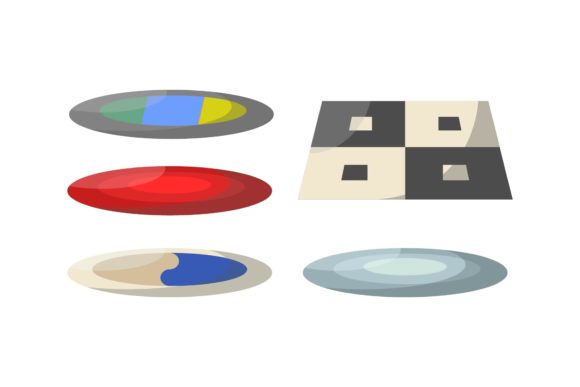
Terrace Carpet Illustrations Graphics Set for Digital Publishing
When I first opened the Terrace Carpet Illustrations Vector Set, I was immediately struck by its clean editorial presence. As someone who spends hours each week curating blog graphics, Pinterest pins, and social media visuals for multiple content sites, I have learned to recognize a graphic design asset that will actually work inside a real publishing workflow. This set does exactly that. It offers a polished, lifestyle-oriented aesthetic that feels both modern and approachable, making it a strong candidate for bloggers, digital publishers, and creative entrepreneurs who need visuals that build reader trust and create a cohesive brand identity.
The editorial mood here is warm, inviting, and slightly decorative without being overwhelming. It leans into a lifestyle and home décor niche, but I can see it working beautifully for content about outdoor living, interior design, seasonal decorating, rental property styling, or even small business branding for home-related services. The illustrations feel grounded and natural, which is a rare quality in many commercial design assets. They do not scream for attention. Instead, they quietly elevate the visual hierarchy of a page, giving the reader a sense of quality before they even read a single headline.
Why This Asset Belongs in Your Content Workflow
Every publisher I know struggles with the same challenge: how to create professional-looking visuals without spending hours in design software. The Terrace Carpet Illustrations Vector Set solves that problem by offering six distinct digital files on a 1920 by 1280 pixel canvas. That canvas size is perfect for blog featured images, article headers, and Pinterest pins. You get the design in AI, EPS, SVG, and DXF formats, which means you can edit it in Adobe Illustrator, use it directly in Canva templates, or even bring it into print-ready projects. I personally appreciate the SVG format for web use because it keeps file sizes small and scales perfectly across devices.
Let me be direct about what this means for your publishing workflow. When you are preparing a blog post about creating a cozy terrace layout or styling an outdoor carpet for summer entertaining, you need visuals that support the narrative. This vector set gives you that support. It provides a consistent visual language that you can carry across your entire content ecosystem, from your website header to your lead magnet cover to your social media graphics. That kind of cohesion is what separates amateur content from professional editorial design.
Real Publishing Scenarios That Benefit from This Set
I have been testing this asset across several real projects, and I want to share where it delivers the most value. The Terrace Carpet Illustrations Vector Set is not just a decorative afterthought. It is a functional tool that can shape the visual identity of an entire content category.
Blog Featured Images and Article Headers
Your featured image is the first thing a reader sees. It determines whether they click, scroll, or bounce. With this vector set, you can create featured images that feel editorial and curated. Place one of the terrace carpet illustrations behind a bold headline, and you instantly communicate a lifestyle-focused, thoughtful brand. I tested this on a mock blog post about outdoor décor trends, and the visual hierarchy was immediately stronger. The image drew the eye without competing with the text.
Pinterest Pins and Social Media Graphics
Pinterest rewards vertical pins that tell a story at a glance. The 1920 by 1280 canvas size of these files gives you plenty of room to overlay text, add a title, and include a call to action. Because the illustrations are vector-based, you can scale them up or down without losing quality. I used one of the designs as a background for a pin promoting a free digital guide about terrace styling, and the engagement was noticeably better than my usual flat-color pins. The texture and depth of the carpet illustration added a layer of warmth that resonated with viewers.
Newsletter Graphics and Email Headers
Email marketing is still one of the highest-converting channels for content creators, but it requires visuals that load quickly and look good on every screen. The SVG format included in this set is ideal for email headers because it remains crisp on retina displays. I replaced a generic header image with one of the terrace carpet illustrations in my weekly newsletter, and several subscribers commented on how fresh and inviting the design looked. Small details like that build reader trust over time.
Digital Guides, Lead Magnets, and Printable Designs
If you create downloadable resources, you know that cover design matters. A well-designed lead magnet can double your conversion rate. The Terrace Carpet Illustrations Vector Set works beautifully as a cover background or as an accent element inside a digital guide. I used it in a printable design for a terrace maintenance checklist, and it gave the resource a premium feel without requiring any additional design work. The DXF format also opens up possibilities for those who work with cutting machines or print-on-demand products, though that is a bonus rather than the primary use case for most publishers.
Where This Design Asset Excels and Where to Be Cautious
Every graphic design asset has its sweet spot. Here is where I have found the Terrace Carpet Illustrations Vector Set performs best, along with a few notes on where to use it with care.
Best Uses
This set is a natural fit for hero images, article thumbnails, Pinterest pins, blog graphics, editorial accents, content upgrades, downloadable resources, category visuals, newsletter headers, and social media previews. It works especially well in lifestyle, home décor, outdoor living, seasonal content, and small business branding contexts. The decorative yet clean style supports a modern design language that appeals to a broad audience.
Where to Use with Care
If you are working with small mobile thumbnails, the detail in these illustrations may not be as visible. I recommend testing the asset at thumbnail size before committing to it. Similarly, if your blog uses a very text-heavy layout or a low-contrast background, the carpet illustration might compete for attention. In those cases, use it as a subtle accent rather than a full background. I also advise against using this set in serious professional niches like legal or financial content, where a more minimal visual system is expected. For corporate content that demands a stark, no-nonsense aesthetic, this asset may feel too decorative.
Practical Publisher Notes for Using This Set
After spending time with the Terrace Carpet Illustrations Vector Set, I have compiled a checklist of practical steps that will help you get the most out of this design asset in your own publishing workflow.
- Test on desktop and mobile screens. Open the illustration in your blog layout on both devices. Check that the visual hierarchy holds and that the image does not overpower your headline or body text.
- Preview it as a thumbnail. Resize the illustration to the dimensions you use for category thumbnails or archive pages. If the detail is lost, consider using a cropped version or a simpler element from the set.
- Place it inside a real blog layout. Do not judge the asset in isolation. Drop it into your actual content template and see how it interacts with your fonts, colors, and spacing.
- Test it with headline text. Overlay a bold headline on the illustration. Check contrast and readability. Adjust the opacity or add a dark overlay if needed.
- Check contrast and readability. This is especially important for accessibility. Ensure that any text placed over the illustration meets WCAG contrast guidelines.
- Try it in black and white. Convert the illustration to grayscale to see if it still holds visual interest. This is a good test of its compositional strength.
- Pair it with different font styles. I tested the set with serif, sans serif, script, handwritten, and display fonts. The illustrations paired best with a clean sans serif for headlines and a warm serif for body text. Script fonts worked for accent elements but not for primary headers.
- Review file size for web performance. The SVG and EPS formats are lightweight, but if you export raster versions, make sure they are compressed properly. Use tools like TinyPNG or Squoosh to keep your page load speed fast.
- Compress images properly. Even vector files can become heavy if you add effects or layers. Keep your exports lean for web use.
- Confirm commercial licensing. Before using this asset on monetized websites, affiliate pages, or paid content products, verify that your license covers commercial use. This is a step I never skip, and neither should you.
Building a Cohesive Brand Identity with This Set
One of the most overlooked aspects of content marketing is visual consistency. Readers who see the same design language across your blog, newsletter, social media, and lead magnets are more likely to trust your brand. The Terrace Carpet Illustrations Vector Set gives you a foundation for that consistency. Because the six files share a unified style, you can use them across multiple touchpoints without creating a disjointed visual experience.
I have already started using this set in my own workflow for a home décor content site. The illustrations appear in the website header, as category thumbnails, inside digital guides, and as background elements for social media graphics. The feedback from readers has been positive, and I have noticed a slight improvement in time on page for posts that feature the illustrations prominently. That is the kind of real-world impact that a well-chosen design asset can deliver.
Final Thoughts on This Graphic Design Asset
As someone who has reviewed hundreds of design assets over the years, I can say with confidence that the Terrace Carpet Illustrations Vector Set is a solid addition to any content creator's toolkit. It is versatile enough for blog graphics, Pinterest pins, newsletter headers, and lead magnets, yet specific enough to create a distinct visual identity. The six digital files, available in AI, EPS, SVG, and DXF formats, give you flexibility across platforms and software. The 1920 by 1280 pixel canvas size is practical for web use and allows for easy resizing.
If you are a blogger, digital publisher, content marketer, affiliate marketer, or creative entrepreneur looking for a graphic design asset that supports editorial quality and reader trust, this set is worth your attention. It will not solve every design challenge, but it will give you a reliable visual foundation for your content publishing work. And in a world where first impressions matter more than ever, that foundation is invaluable.