Backache and Cramps Vector Illustrations for Embroidery
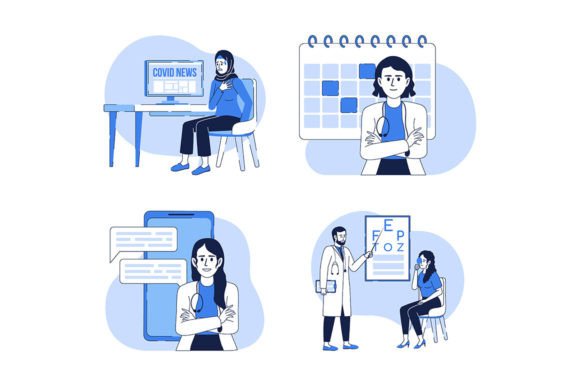
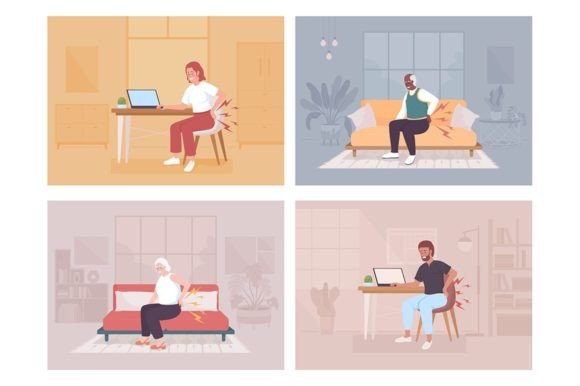
When I first opened the Backache and Cramps Vector Illustrations set, I was struck by how directly it speaks to a very real, everyday experience. This isn't a whimsical floral or a cute animal. It is a flat color vector illustration set centered on lower back pain while sitting, osteoarthritis symptoms, and cozy interior backgrounds. As someone who reviews embroidery designs for real project use, I immediately started thinking about where this set would shine and where it might need careful handling. The fully editable 2D simple cartoon character collection has a clear, approachable style, but the subject matter is surprisingly versatile for certain niche markets.
First Impressions and Visual Personality
The mood of this set is honest, relatable, and slightly humorous without being disrespectful. The simple cartoon characters are drawn with clean lines and flat color fills, which makes them naturally suited for embroidery translation. The cozy interior backgrounds add context but are not overly complex. In embroidery, we often strip down artwork to its core shapes, and this set is already close to that ideal. The lower back pain posture is recognizable instantly, and the osteoarthritis symptoms are depicted in a way that feels educational yet gentle. For a designer, this opens up conversations about health, wellness, self-care, and even gentle humor around aging or desk work struggles.
What I appreciate most is the lack of excessive detail. In embroidery, tiny lines and gradients become messy or lost. The flat color vector approach here means each element has a clear boundary, which translates well into satin stitches, fill stitches, and even applique if you want to add fabric texture. The color palette appears to be soft and muted, which works beautifully on light to medium fabrics. Dark fabrics would require careful thread color selection to maintain contrast, especially for the interior background elements.
Where This Design Naturally Belongs
This set is not for every project, but it has a strong home in specific product categories. I immediately thought of custom tote bags for healthcare workers, physiotherapy clinics, or wellness boutiques. A simple embroidered patch on a sweatshirt showing the lower back pain character could be a subtle conversation starter. For Etsy sellers, this could be turned into a funny yet empathetic gift for someone dealing with chronic back pain or arthritis. The cozy interior scenes also make it suitable for pillow covers or tea towels in a home decor context, especially if paired with a message about self-care.
Custom apparel is another strong candidate. A sweatshirt embroidery featuring one of the simple cartoon characters with a clever phrase like "Sitting is the new smoking" or "My back hurts just looking at this" would resonate with office workers, remote employees, and aging populations. Baby embroidery is less likely here, unless you adapt the style to a more playful angle. For holiday gifts, this could be a humorous present for a relative who complains about aches and pains. The key is to match the tone to the recipient's sense of humor.
For boutique branding, this set could be used on aprons for a wellness cafe or a massage therapy studio. It also works well as a printable mockup for digital product previews, allowing customers to see the design in context before purchase. As design assets, the vectors give you flexibility to resize, recolor, and combine elements without losing quality.
Real-Life Embroidery Scenario: A Custom Tote Bag
Let me walk through a real scenario. I decided to prepare a custom embroidered tote bag for a friend who works from home and constantly complains about lower back pain. I chose the character sitting in a cozy interior, highlighting the lower back pain posture. The flat color vector design made digitizing straightforward. The fill stitches for the character's body and the satin stitches for the outline came out clean. The interior background elements, like a chair or a cushion, added context without overwhelming the composition.
After stitching, the result was clear and readable at a distance. The flat colors gave it a modern, illustration-like look that felt intentional. My friend loved it, and several people asked where she got it. That is the moment I realized this set has real commercial potential for small shop products and Etsy listings. Customers connect with designs that reflect their own experiences, and back pain is incredibly common.
Careful Use Considerations
Not every project will suit this set. Small hoop sizes are a challenge because the characters have some detail in the face and posture. If you shrink the design too much, the facial expressions and hand positions become unclear. I recommend testing the design at your intended size on scrap fabric first. For a 4x4 hoop, you might only fit one character without the background. For a 5x7 hoop, you can include the cozy interior elements comfortably.
Textured fabrics like fleece or thick knits can distort the clean lines. The flat color style relies on sharp edges, so a stable woven fabric or a medium-weight cotton works best. Stretchy fabrics like jersey require a cutaway stabilizer to prevent the stitches from puckering. Dark fabrics need high-contrast thread colors, especially for the lighter interior elements. I recommend a white or light gray thread for the background and darker colors for the character outlines.
Curved surfaces like caps are tricky because the design is relatively wide. A cap hoop might not accommodate the full interior scene. If you want to use this on a cap, consider using just the character without the background. Dense stitch areas are not a major concern here, as the flat color fills are moderate in density. However, if you combine multiple elements closely, check the stitch density to avoid fabric puckering.
Products that need frequent washing, like tea towels or aprons, should use high-quality thread and a dense enough fill stitch to prevent fraying. The simple shapes are actually forgiving for washing, as there are no tiny details to catch or pull.
Impact on Visual Appeal and Product Value
When a customer sees a design that reflects their own pain or experience, the emotional connection is immediate. This set does not try to be overly artistic or trendy. It is honest, and that honesty translates into trust. For a handmade product, that trust is gold. A customer who buys a tote bag or sweatshirt with this design is likely to feel understood, which increases the perceived value of your product.
For craft business owners, this set helps build brand consistency if you focus on wellness, humor, or relatable daily struggles. The giftability factor is high for people who appreciate self-deprecating humor or who need a lighthearted way to talk about a serious issue. The recognition factor is also strong because back pain is so universal. People will see the design and immediately think of someone they know.
From a professional standpoint, the clean vector art ensures that your embroidery file will digitize cleanly. The flat colors mean fewer thread changes, which is efficient for production. The simple cartoon style also works well for applique, where you can use fabric pieces for the larger color areas to add texture and reduce stitch count.
Practical Embroidery Designer Notes
Before you start a project with this set, here are some notes I always follow:
- Test the design on scrap fabric at your intended hoop size. Check that facial features and hand positions are clear.
- Review thread color contrast against your fabric. Light backgrounds work best with the original palette. For dark backgrounds, invert the colors or use bright thread choices.
- Check stitch density, especially if you combine multiple elements. The flat color fills should be dense enough to cover the fabric but not so dense that they cause puckering.
- Confirm your hoop size can accommodate the full scene, or plan to crop or separate elements.
- Test the design in black and white mockups first. This helps you see the shape and composition without color distraction.
- Use proper stabilizer for your fabric type. A tearaway stabilizer works for stable wovens, while cutaway is better for knits and stretchy fabrics.
- Inspect small details like the hands and face. If they are too small to stitch clearly, enlarge the design or simplify those areas.
- Check licensing before selling finished items or digital products. This set is described as editable vectors, but confirm whether commercial use is allowed for embroidery files and finished goods.
For those selling on Etsy or at craft fairs, consider offering a range of products using this set: a tote bag, a throw pillow, a sweatshirt, and a set of tea towels. This gives customers options and increases your perceived product line depth. The design assets are also useful for printable mockups in your listings, helping customers visualize the finished product.
Final Thoughts on This Set
The Backache and Cramps Vector Illustrations set is not a mainstream floral or a trendy geometric pattern. It is a niche design with strong emotional resonance for a specific audience. As an embroidery designer, I appreciate when a set understands its own strengths. This one stays simple, readable, and relatable. With proper testing and thoughtful product placement, it can become a steady seller for wellness-focused shops, humor-based brands, and anyone who wants to make people smile about a shared struggle.
If you are a crafter or small business owner looking for a design that stands out in a crowded market, this set deserves a close look. Just remember to test your hoop size, check your stabilizer, and confirm your licensing. When everything aligns, the finished product will feel personal, professional, and genuinely useful.