Emergency Situation Vector Illustrations & Graphics
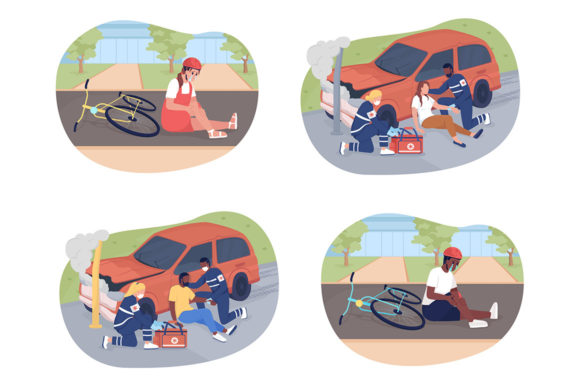
When I first opened the Emergency Situation Vector Illustrations set, I was preparing a new batch of listings for my Etsy shop. I had been looking for a graphic design asset that could fill a specific niche: safety education, first aid awareness, and parenting content around common injuries. This collection immediately caught my attention because it covers real scenarios that buyers actually search for. Paramedics helping at a car accident, a child falling at home, bicycle-related injuries, and auto crash scenes are all included. The visual personality is clear and purposeful. It is not overly playful or cartoonish, but it is not grim either. The colour scenes feel approachable without downplaying the seriousness of the situations. For a digital product creator, that balance is valuable. It means the asset can work across educational materials, printable products, and even merchandise without feeling inappropriate or off-brand.
First Impressions of This Graphic Design Asset
The Emergency Situation Vector Illustrations set presents itself as a ready-to-use commercial design bundle. The file formats include JPEG, AI, PNG, and EPS, which cover most of the workflows I rely on. For a seller like me, that means I can open the vector files in Adobe Illustrator or Affinity Designer, adjust colours or composition if needed, and export clean PNGs for print-on-demand products. The illustrations themselves depict paramedics assisting accident victims, childhood falls, bicycle mishaps, and auto crash scenes. The scenes are colourful but restrained. They do not rely on excessive gore or shock value. Instead, they focus on the moment of response and help. That makes the asset suitable for a wider audience, including parents, educators, first aid trainers, and small business owners creating safety-themed products.
The mood of this set leans toward informative and supportive. It is not a decorative or whimsical illustration pack. The niche appeal is strong for anyone selling digital downloads related to child safety, driver education, bicycle safety, or emergency preparedness. If you are a Cricut user or a print-on-demand seller, you can already see possibilities for sticker designs, t-shirt graphics, and educational posters. The visual hierarchy within each scene is clear. The paramedics and victims are the focal points, and the surroundings provide context without clutter. That makes the illustrations easier to adapt for smaller product formats like mugs, tumblers, or planner stickers.
Testing the Collection for a Real Product Launch
I decided to test this design bundle the way I test any new asset before publishing. I picked three scenarios from the set: the car accident scene with paramedics, the child falling at home, and the bicycle injury scene. For each one, I created a quick product mockup on a t-shirt, a wall art print, and a sticker sheet. I also tested the illustrations inside a Canva template for a social media graphic aimed at parenting blogs. The results were solid. The vector files scaled cleanly, and the PNG exports maintained transparency without rough edges. The AI and EPS files opened without issues in Illustrator, and the layers were well organised. That is a practical detail that saves time when you are preparing multiple product variations for a creative marketplace.
I also tested the illustrations on a dark background and a light background. The color scenes held up well on both. On white backgrounds, the illustrations looked crisp and professional. On dark backgrounds, the contrast was still readable, though I would recommend checking the specific file you plan to use. Some scenes rely on lighter tones, so a dark background might wash out certain details. For product thumbnails on Etsy or Creative Fabrica, the illustrations work well because they are specific and recognisable. A buyer searching for safety or first aid content will immediately understand what the product is about. That clarity helps with click-through potential and conversion.
Where These Illustrations Shine in Commercial Products
The Emergency Situation Vector Illustrations set is a strong fit for several product categories. Here are the applications I found most promising after testing:
- Printable wall art: The scenes work well as educational posters for pediatric clinics, schools, or parenting spaces. The colour scenes are engaging without being frightening.
- Sticker design and sublimation designs: The vector files make it easy to isolate individual elements for sticker sheets, laptop decals, or sublimation prints on mugs and tote bags.
- T-shirt graphics and merchandise: The paramedic and bicycle injury scenes translate well to apparel. The composition is simple enough to read on a shirt at a glance.
- Canva templates and social media graphics: The PNG files can be dragged directly into Canva for quick template creation. This is useful for content creators and bloggers producing safety awareness posts.
- Educational printables and activity kits: The childhood falls and car accident scenes can be used in first aid teaching materials or safety worksheets for children.
- Product mockups: The illustrations add context to mockups for listing images. A paramedic scene on a mug mockup immediately communicates the theme.
- Packaging design and brand identity: For small businesses selling safety products, this set can serve as a consistent visual language across labels, inserts, and packaging.
The asset also works well for themed bundles. If you are creating a first aid awareness collection or a child safety bundle, you can combine several scenes into a single digital download. Buyers on creative marketplaces often look for cohesive sets, and this collection provides that unity.
Where to Exercise Caution With This Design Bundle
No graphic design asset is perfect for every product, and the Emergency Situation Vector Illustrations set has some limitations worth noting. The scenes are detailed enough that they may not work well for tiny sticker designs. If you are producing small planner stickers or intricate Cricut projects, the individual elements might lose clarity when scaled down. I recommend testing the illustrations at the actual size of your final product before committing to a full production run. For Cricut or Silhouette cutting projects, the vector files are clean, but you will want to check the cutting lines carefully. Some of the scenes have overlapping elements that could complicate the cut path.
Another area to watch is low-resolution printing. The PNG files are provided at a standard resolution, but if you plan to enlarge the illustrations for large posters or banners, you should work from the vector AI or EPS files to maintain sharpness. The illustrations also rely on colour scenes, so printing on dark or heavily textured substrates may require a white underbase or a different production method. For sublimation, the colours should transfer well, but I always recommend a test print on your specific blank product before listing.
Text-heavy templates can be tricky with this set. The illustrations are already visually rich, so adding large amounts of text on top of them can create a cluttered layout. If you are designing greeting cards or invitation templates, you may want to place the text in a separate area or use a semi-transparent overlay to maintain readability. The set works best when the illustration is the hero of the design and the text supports it.
Practical Seller Notes Before You Publish
Before you use the Emergency Situation Vector Illustrations in your own products, here are a few practical steps I recommend based on my testing:
- Test on real mockups: Place the illustration on a t-shirt mockup, a mug mockup, and a wall art frame. Check how the composition reads at different sizes and on different product shapes.
- Preview as a marketplace thumbnail: Shrink the illustration to thumbnail size and see if the scene is still recognisable. If the details blur, the design may not perform well in search results.
- Check contrast on white and dark backgrounds: Some scenes work better on light backgrounds. Test both and choose the one that preserves the visual hierarchy.
- Verify PNG transparency: Open the PNG files in your design software and confirm that the transparency is clean. No white halos or rough edges should appear.
- Inspect SVG cut quality if applicable: If you are using the vector files for cut projects, check each layer and remove any overlapping paths that could cause cutting errors.
- Confirm file resolution: For print products, ensure the resolution meets your printer’s requirements. Vector files give you the flexibility to scale, but raster exports need to be checked.
- Organise files clearly for customers: If you are selling a digital download bundle, keep the file naming consistent and include a readme file with usage notes. Buyers appreciate clarity.
- Pair with appropriate font styles: For products that include text, try a clean sans serif font for a modern look, a serif font for a more formal feel, or a handwritten font for a friendly tone. The illustration style supports most font families, but avoid overly decorative scripts that compete with the scene.
- Confirm commercial licensing: Always read the license terms for this graphic design asset before selling finished products. Some licenses restrict the number of units you can produce or require attribution. Know the rules before you publish.
Building a Product Collection Around the Asset
One of the smartest ways to use the Emergency Situation Vector Illustrations is to build a small product collection around it. For example, you could create a first aid awareness bundle that includes a printable poster, a set of sticker sheets, a mug design, and a t-shirt graphic. All of these products would share the same visual language, which strengthens your brand identity and makes your shop look more professional. Buyers are more likely to purchase multiple items from a cohesive collection than from a single standalone design. This asset gives you enough scenes to create variety without losing consistency.
I also see potential for seasonal bundles. Back-to-school season, for instance, is a natural fit for the childhood falls and bicycle injury scenes. Parents and educators are looking for safety reminders during that time. Similarly, summer safety bundles could feature the bicycle and car accident scenes. By aligning your product releases with seasonal demand, you can increase your visibility on creative marketplaces and Etsy.
Final Thoughts on Commercial Viability
After working with the Emergency Situation Vector Illustrations set, I can say it is a useful addition to a digital product creator’s library. It is not a decorative asset, but it does not need to be. Its strength is in its niche focus and clear visual storytelling. For sellers who create educational content, safety awareness products, or parenting resources, this set provides a ready-made foundation for printable designs, merchandise, and digital templates. The file format flexibility makes it easy to adapt across different platforms, from Canva to Cricut to print-on-demand services.
The asset is not without its limitations, but those are manageable with proper testing and preparation. The key is to use the illustrations where they can be seen clearly and to avoid forcing them into formats that require extreme detail or heavy text overlay. If you are looking for a graphic design asset that supports a specific niche with professional, colourful scenes, this set is worth considering. It can help you create a more polished and trustworthy product collection, which ultimately supports better customer trust and higher perceived value in your online shop.